Sunday, May 19, 2013

The Chocolate-Covered-Cookie Tantrum


I would like to introduce you to my guest this week, Emily.  I am so privilaged to have such talented experts among my blogging friends! 


Hi there, my name is Emily and I have a little blog called "A Tossed Salad Life." The blog focuses mainly on my recipes, crafts, and my family. Jenny and I participate in a blog mentoring group together, and she mentioned that she was interested in starting up a series of guest contributors. When she asked if anyone might be able to assist, I was delighted to volunteer!

While my blog discusses slow cooker recipes and sewing projects, I have a day job as a developmental psychologist. I have spent
too many  a lot of years studying early childhood development, particularly social-emotional development. I find those first five years of a child's life to be an amazing period. I can't help but marvel when I compare the primitive newborn that comes home from the hospital with her parents to the interactive, social and talented little person that celebrates her first birthday one year later!

I thought that I would talk today about temper tantrums. Temper tantrums are very common experiences in children who are between the ages of one and four. They are completely normal! Every parent who has taken their toddler/young preschooler out into the world has had their child tantrum to some degree, at some point in time!

Just because tantrums are extremely common:
1) Doesn't mean that they aren't frustrating;
2) Doesn't mean that some children have worse and more frequent tantrums than other children;
3) Doesn't mean that you are a bad parent!!!

I have vivid memories of my 10-year-old screaming and carrying on in a restaurant one night when he was about a year and a half old. He wanted to explore and it was getting close to his bedtime. He started screaming, and I took him into the foyer of the restaurant. I then must have spent a good fifteen minutes calming both of us down before returning to our meal. Around this time, I decided to change the way I was thinking about tantrums. I knew in my head his tantrums were not meant to be elaborate plots to disrupt things, but when they were happening, I felt angry and upset at my son for his behavior and at myself for my inability to manage them.

The Chocolate-Covered-Cookie Tantrum
Luckily, I found this book called the Chocolate Covered Cookie Tantrum, and my son and I read that book a lot. It discusses the perspective of the tantrum from the little girl, not the parent. When I read the book, it reinforced everything that I knew about tantrums, but it gently reminded me about how my son must be feeling when he was tantruming. Toddlers feel out of control when they are tantruming. It's a whirlwind of emotions-- rage, sadness, frustration, impatience, and exhaustion. The author and illustrator of the Chocolate Covered Cookie Tantrum really captures the intensity of the emotions that a tantruming toddler is experiencing.

One of the things that we started doing with my son is labeling what was going on during his tantrums. We gave him words to help explain his emotional tornado. As adults, we use language to help regulate our own emotional experiences. Think about when you start feeling mad or frustrated or anxious. You have the physiological reaction, and then you start labeling how you are feeling, and thinking about solutions. All of this involves using your words!

Little guys don't have those words, and lots of times, don't even know what they are feeling-- they just know it feels bad... and big... and scary! For my son, we started talking him through his tantruming. What I was trying to do was giving him the words that he didn't have yet. "You're so mad. You are so mad that we had to leave the park. You liked the park. You wanted to stay. You feel mad when Mommy says it is time to come home. You feel so sad that you can't play all day at the park. You are mad that you can't do everything you want to do..." It basically is giving a running dialogue for the tantrum. It is a technique that I have recommended to parents since, and have heard others' recommend to parents.

I want to point out that I wasn't telling my son that it was okay to tantrum. I wasn't condoning his tantrum, just trying to help him develop some skills to prevent future tantrums. I was being matter-of-fact. Sticking only to the facts, but including emotional language. If he had started to hit me, or slap me, or become physically aggressive, I would have needed to address that. This was for my son who was just flailing about on the ground, screaming and wailing.

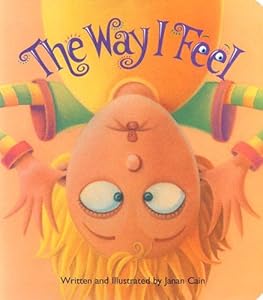
We also started learning about emotions, just like we learned about shapes and colors and numbers. We got a number of books that talked about feelings and recognizing them. It is so helpful to kiddos to develop this skill. It gives them power over their emotions! Tantrums are the opposite of this-- a sense of being powerless over very big emotions! I want to tell you that it worked. My son got very good at labeling emotions. I remember having him tell me at four that he was frustrated or nervous. If you are looking for emotion labeling books. I particularly like this one:


(Everything I've talked about describes those typical toddler-aged tantrums that generally start subsiding by the later preschool period, around the age of four. If you have a little guy whose tantrums don't feel typical, or have much older child with tantrums the emotion labeling and emotion narrative will probably be less effective!)

Thank you Emily!  What helpful information about handling toddler tantrums!  For more information aboue emotional regulation, consider visiting the Conscious Discipline resource page and checking out the Managing Emotional Mayhem book by Dr. Becky Bailey. 

Sunday, May 12, 2013

Happy Mother's Day


Our guest post today is written by Susan from Organized 31.  Susan and I met through the "Growing Together Blog Mentoring Group" that was organized by One Artsy Mama.  Please join me in welcoming Susan as she shars how her mom has inspired her to be the best in all she does!

Happy Mother's Day!  I'm Susan from Organized 31.  I was so excited when Jenny asked me to share my thoughts on what my mother has taught me about being a mother. 
 
I'm a wife to my wonderful active duty Air Force hubby, mother to 3 beloved and wonderful children, a parent educator with over 20 years experience teaching child development and parent education, and most importantly today, I'm the daughter of my wonderful mother.
 
I am who I am because of my mother.   I am the mother I am because of my mother.  She has taught me so many invaluable lessons by being the person she is and the mother she is. Can you tell that I admire my mom?
 
 
The first lesson my mom taught me is compassion.  Your child needs and wants you to love, comfort and understand them.  When they're little, they need you to kiss their boo-boos all better.  When they're older they need you to listen to tween and teen drama.  Your children need you to be on their side.  That doesn't mean that you blindly support their actions, but it does mean that you always support them.  My mom always told me,"There's nothing you can ever do to make me stop loving you.  I may not like some of the things you say or do, but I will always love you no matter what."  To this day, when I have a physical or emotional boo-boo, it's my mom that I want to run to first.
 
My mom taught me to be resilient and tenacious.  My mom's grandparents were dirt farmers (her description) in Oklahoma.  They didn't have much at all.  My mom's parents made sure that she went to college, which was unusual in that day for a girl from her background.  My mom has fought battles in her life that would break a lesser person.  She has fought through those battles with bull-headedness tenacity, resilience, grace and an incredibly positive attitude.  From my mother's example, I've learned to have determination and never give up.  Tenacity and determination are traits all parents need to parent successfully and traits I want to pass onto my children.  The world is an unpredictable place and our children need to learn to be resilient.


 My mom has a love of learning that was passed to her from her father.  My mother's family placed a very high value on education.  My great-grandmother graduated from 8th grade.  She worked incredibly hard on the farm to make sure her 7 children all graduated from high school.  My grandfather worked incredibly hard to send my mother and uncle to college to receive the education he had wanted for himself but was denied because the family couldn't afford it.  My mother and father worked incredibly hard to give my brother and I an unparalleled education.  Whenever my mother talks to my children she always asks, "What did you learn today?"   I love that she continues to want to learn new ideas and is interested in what my children are learning.  It's the love of learning that she passed on to me that led me to start my blog, Organized 31, just because I didn't know much about "technology" and wanted to learn.  As a parent, we are always in the process of  learning.  Just as we figure out the stage our child is at and how to best deal with that stage, out child grows into a new stage.  Parents must always be learning about their children and about being a parent.
 
I could tie up your entire day telling you about all that I've learned from mom.  I treasure all the life lessons she's taught me and let me just say, thank you, Mom.  I love you.

Wednesday, May 8, 2013

Hop into Fine Motor Skills for Preschoolers with "Five Green Speckled Frogs"

One of my all time favorite spring songs is "Five Green Speckled Frogs".  Preschoolers love this song and there are so many fun activities you can do with frogs.  What preschooler wouldn't rather hop than walk to their next destination?


This activity was inspired by a post I recently pinned from Deborah over at Teach Preschool.  I've made lots of sensory bags in the past, but this post inspired me to add my own twist to it with frogs and flies.


 Simple, simple, simple!  I just grabbed some green craft foam and cut out circles about the size of a quarter.  Then I used a green marker to add speckles to make our green speckled frogs.


The flies were even easier than the frogs!  We had an old jar of craft foam with random pieces in it including various black circles.  Some kids got some rather large flies for their frog to gobble up!  This opened up a great conversation about size and comparing what they had in their bag!

I prefer to use freezer bags when we make sensory bags.  They are heavier and less likely to leak.  The quart size bags are the perfect size.

 
Fill each bag with about 1/2-3/4 cup of any brand of hair gel.  I usually get mine at the dollar store.  This gel was perfect because it was already blue.  You can add food coloring to it if you want to change the color or make it more intense. 


Now all you need to complete your little "pond in a baggie" is a frog and a fly.  Throw one frog and one fly into each bag and seal it up tight.  For extra assurance I fold over the top of the baggie and tape it closed with clear packing tape.
 

I challenged the kids to help the frog "chase" the fly around the pond until they caught the fly!  They also enjoyed helping the fly get away!  Imagine all the fine motor and sensory skills you are strengthening as they work their way around the pond with frog and fly!  Several students kicked it up a notch and even tried this with the baggie on their head!  They loved the way it felt and really had to engage their brains to help them catch the fly without looking!

One of my favorite things about this activity is that they were working many of the same fine motor skills that they do when they cut and write, but they were doing it without a worksheet!  Fun for everyone!


Sunday, May 5, 2013

Guest Post

I'd like to introduce you to a new weekly feature here at Ignite Learning.  Every Sunday we will be having a guest post from people around the globe who are using Conscious Discipline in their classroom or home.  Our first guest this week is Barbara from over at Grade ONEderful.  She is also the amazingly talented blog designer who designed my blog!  Let's give Barb a warm welcome!

Hi! This is Barb from Grade ONEderful and Ruby Slippers Blog Designs.  I'm very pleased to be guest posting on Jenny's blog. Thank you, Jenny!


I have to admit I was kind of nervous when Jenny asked me to share my experiences with Conscious Discipline on her blog, because although I've read the book (see above) and LOVE it, I haven't implemented any of the structures. Pretty embarrassing, right?

But after some thought, I realized I AM using many of the concepts because I think about them almost daily and they're starting to permeate my teaching.

One thing I did was make a STAR poster to remind me to Smile, Take a deep breathe AND Relax.  This one little step has been big for me, because although I'm generally a pretty patient person, I can also get excited (usually in a good way) but my voice gets louder and I tend to get the kids a little too jazzed up at times.

 
You can click on the poster to grab it.

Having the poster above my desk is a great daily reminder for me. Occasionally I ask the kids to close their eyes, smile and take a breath. It really is amazing how quickly a more peaceful tone envelops the classroom.

The other most noticeable thing that's happened for me is that I'm having much more success dealing with the occasional temper tantrum (the kids', not mine :)).

In Conscious Discipline Dr. Becky Bailey says, "It is important to remember that anger is a secondary emotion. It is a cover for fear. Every angry situation is a resistance to 'what is'".

This idea was HUGE for me and it really helped me deal with a child in my class who often shuts down and/or starts yelling when he's upset.  Most of the time I've been able to remain calm and remind myself that he's feeling powerless and that my job is to move him through that feeling in a loving and safe way.  If I remember to do this, then he always settles down quickly. I try to acknowledge the child's feelings and then quickly help him find a way to deal with whatever is upsetting him.


This is a beautiful book you can use in your classroom to introduce your children to mindful breathing, to reinforce the power of a smile, and to establish a peaceful environment. I purchased it last fall and I think it's a lovely way to supplement your Conscious Discipline routines.

Thanks again, Jenny, and have a great day everyone!


Tuesday, April 30, 2013

Building Powerful Connections with Infants and Toddlers

If you are a parent or teacher chances are that you have felt like this at some point in your life!


There are so many things demanding your time, attention, and energy.  If you don't get some relief quickly you might just short circuit, explode, or errupt into flames! 

This might be especially true if you have infants and toddlers or children with special needs in your care!

Let's watch as Dr. Becky Bailey describes this problem and the solution she has created through Baby Doll Circle Time.

 
Baby Doll Circle Time is a real gift to parents, teachers, and children alike!  The program is very user friendly.  The amount of training and resources that are included in the curriculum are priceless!  


Although this program is designed for the Toddler and Twos population, the concepts and practical application are appropriate to infants, children with special needs, and children up to about four years of age. 

In the back of the book there is an instructional DVD with many helpful tools.  Dr. Bailey spends some time instructing viewers on the importance and basics of the attachment relationship, attunement, and social play.  There are also many sample lessons and examples of how this might look in instructional settings.

The resource guide is packed full of tons and tons of helpful information and suggestions to help you set yourself up for success!  There is a supply list, implementation plan, ideas for modifications and adaptations for children with special needs, tips to ensure success and further information about the structure of the program, attachment, attunement, and social play.

I have been using Baby Doll Circle Time with my three-year- old class this year.  It is so easy and fun to use and the children are just delighted when they see that it is time to get the babies out!

This is a memorable moment from the very first time we got the babies out with this little guy.  He has special needs and, at that time, very limited imitation, joint attention, and social play skills.


Before beginning this play session, I was very conscious of the critical importance of attuning to his lead.  My goal was to find a connection that would be familiar to him.  The curriculum was my guide, but he was my "dance" partner.  It is so important that we adjust our instruction to the specific needs of each child in our care.  When we do, a beautiful "dance of attunement" is the result. 

Wouldn't you know, after learning to "kiss the baby" at school he went to the babysitter's house and started kissing the baby dolls there.  It didn't stop there!  Before you know it he was giving kisses to mom and dad and other familiar adults and demonstrating other imitative skills!  Just from one "lesson"!

For more information about Baby Doll Circle Time head on over to the Conscious Discipline website at:  www.consciousdiscipline.com.  It is definately worth taking a peek!